
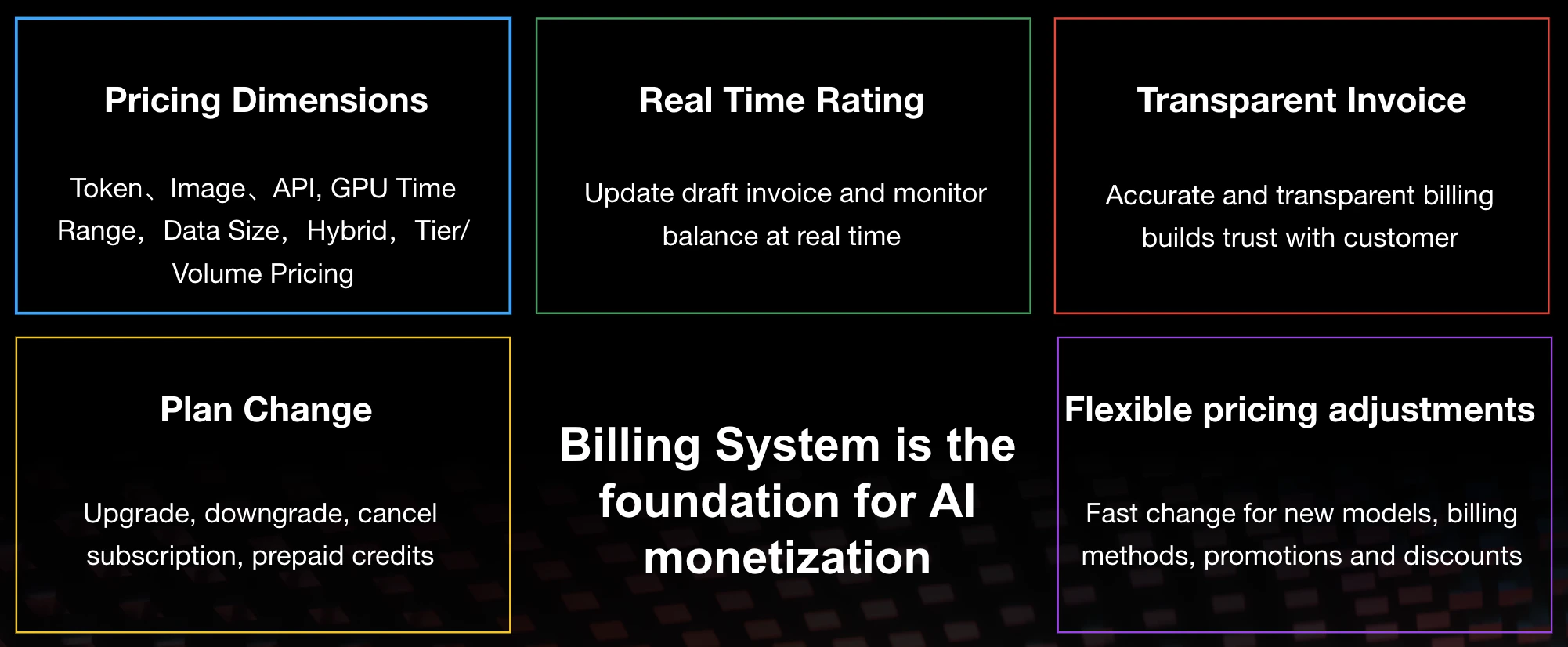
Highly complex usage-based and subscription billing models
AI and Agent services often involve multiple billing dimensions at the same time, including subscriptions, token consumption, API calls, and compute time.Many companies struggle to convert complex usage data into billable data in real time and with high accuracy, lacking flexible, automated, and scalable billing infrastructure — which severely limits monetization efficiency.
High Barriers to Global Tax and Compliance
Cross-border operations must handle multi-currency settlement, varying VAT, GST, and sales tax rules across countries and regions, as well as constantly evolving regulatory requirements.Lack of unified tax and compliance capabilities often leads to complex invoicing processes, higher compliance risks, and even delays in international market expansion.
High Cost and Long Timelines for Building Billing Systems In-House
From usage data collection and pricing engines to billing systems and integrations with payments and tax services, building a complete billing stack in-house requires significant engineering investment and long-term maintenance costs.This not only puts significant financial pressure on teams, but also diverts focus away from core product innovation and slows down international expansion.
Limited Scalability of Traditional Billing Systems
Traditional subscription-based billing systems struggle to support real-time metering, multi-dimensional pricing, and complex plan configurations required by AI use cases.When business models and customer requirements evolve rapidly, frequent custom development is often required, resulting in limited flexibility and scalability.
Highly Fragmented Payment and Revenue Systems
Companies often need to integrate with multiple payment gateways, tax platforms, and ERP or financial systems at the same time. Without unified orchestration and automated reconciliation,this leads to fragmented data, complex reconciliation, and difficulties in revenue recognition, ultimately impacting overall financial and operational efficiency.